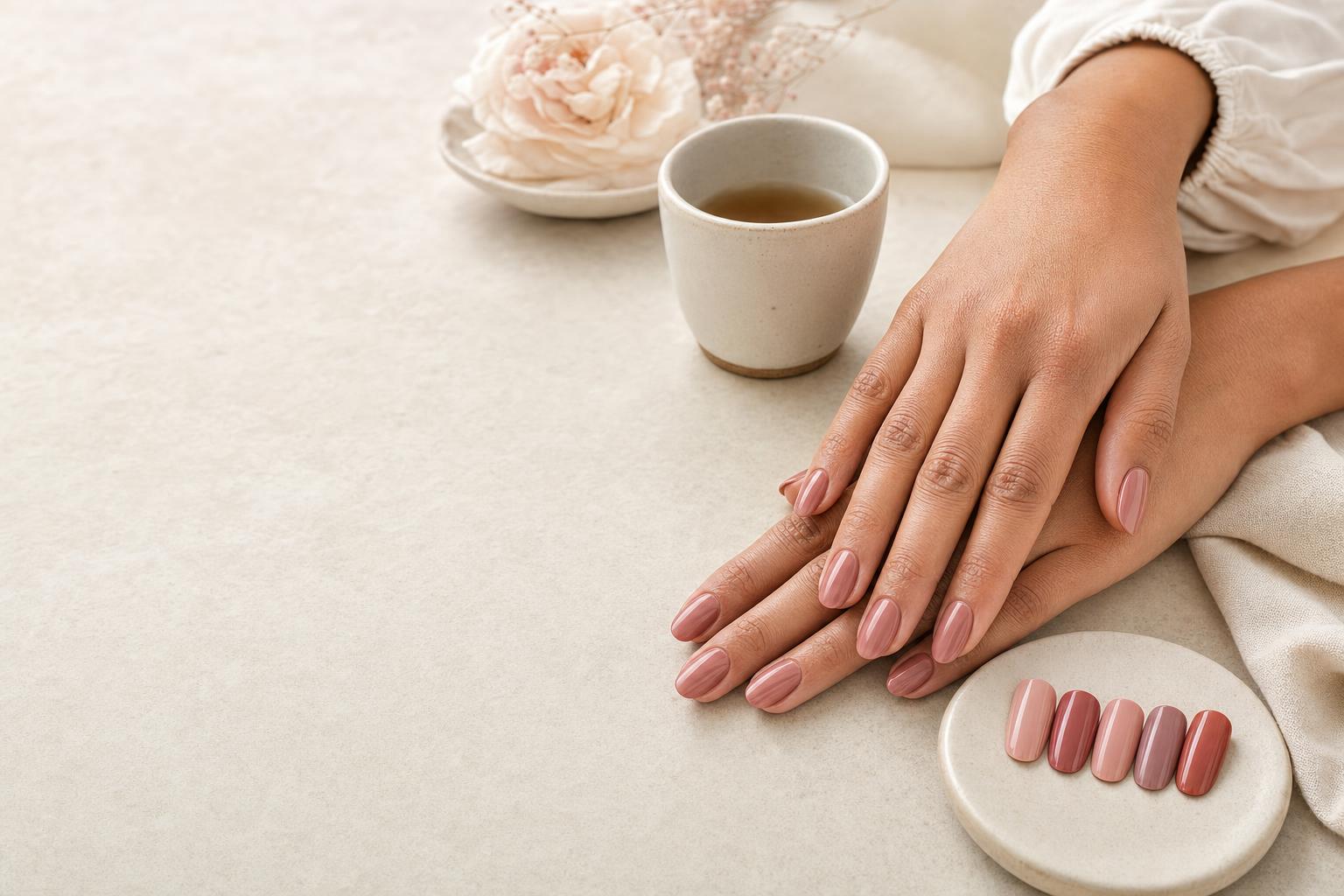
nail colours
Nail Colours for Every Skin Tone: How to Choose the Perfect Press-Ons
Find the nail colours that flatter your skin tone and choose press-ons that make your hands look instantly polished.
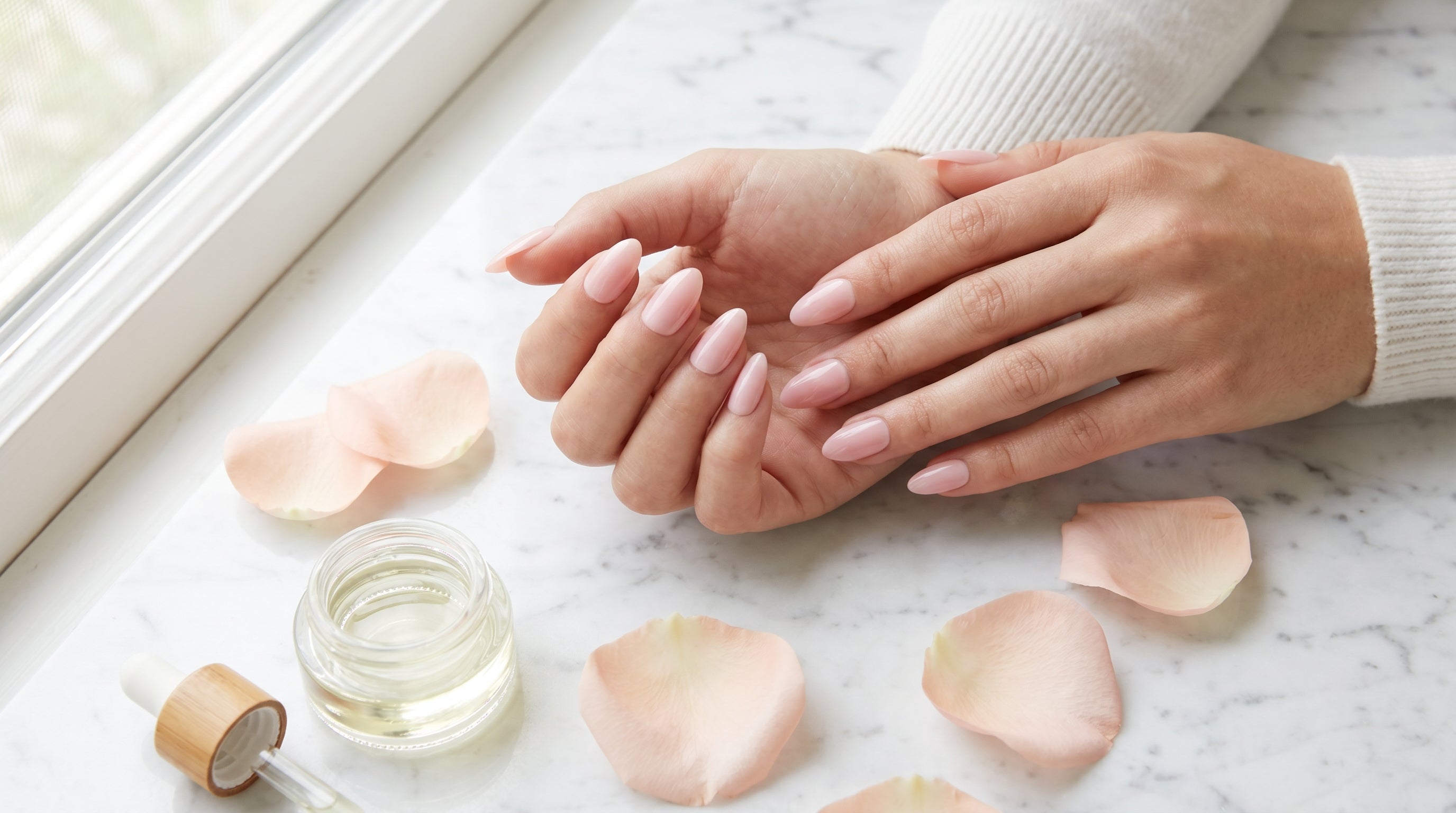
If your nails are brittle, thin, or damaged, press-on nails are often one of the best options you have — not one of the worst. They let your natural nails rest and recover while you still get to enjoy beautiful nails. But there are a few things worth knowing before you start.
Here's the full picture for anyone with sensitive or compromised nails.
Nail damage comes in many forms and from many directions. The most common culprits:
Yes — as long as you apply and remove them correctly. Press-ons don't require any chemical layering on the nail, and they don't need the aggressive filing and drilling that acrylics do. They simply sit on top of your natural nail.
The key advantage: your nails can grow and recover underneath.
Compared to gel or acrylic — which involve UV curing, filing, and sometimes e-filing — press-ons are considerably gentler. Especially if you opt for adhesive tabs instead of nail glue, the impact on your nail plate is minimal.
Not every application method is equally gentle. Watch out for:
The time between sets matters just as much as the application itself. Use that window to actively care for your nails:
If your nails are painful, the skin around the nail bed is red or swollen, or you suspect a fungal infection — pause and see a dermatologist first. Press-ons aren't a medical solution. When in doubt, get it checked.
For most people dealing with everyday nail damage — from gel, acrylics, or general wear — press-ons are absolutely fine to use, as long as you're smart about it.
Longer, pointed shapes like stiletto or ballerina put more mechanical stress on an already compromised nail plate. Opt for shorter oval or round shapes. They distribute pressure more evenly and tend to feel more stable.
If you also have naturally short nails, our guide on best nail shapes for short nails is worth a read.
Only if applied or removed incorrectly. Wrong size, overly strong glue, or ripping them off can damage the nail plate. Done right — especially with tabs instead of glue — the risk is very low.
Keep each set to 7–10 days. Follow up with at least 3–5 days of rest and active care (cuticle oil, nail serum) before applying again.
No. Covering an active fungal infection with a press-on creates a warm, moist environment that makes it worse. Treat the infection fully first, then return to press-ons once the nail is healthy.
Not necessarily — the core materials are similar. But budget sets sometimes have less precise sizing, which means a poorer fit and more pressure on the nail. Quality matters most in fit and the adhesive included.
Yes — Popink nails are designed to be reused if you remove them carefully. For damaged nails, reusing with tabs is actually a great approach: less glue, less chemical exposure per wear. See our guide on how to reuse press-on nails.
You don't need perfect nails to wear beautiful ones. Browse the Popink collection and filter by shape and length to find what works for your nails — or reach out if you need help choosing.
Find the nail colours that flatter your skin tone and choose press-ons that make your hands look instantly polished.
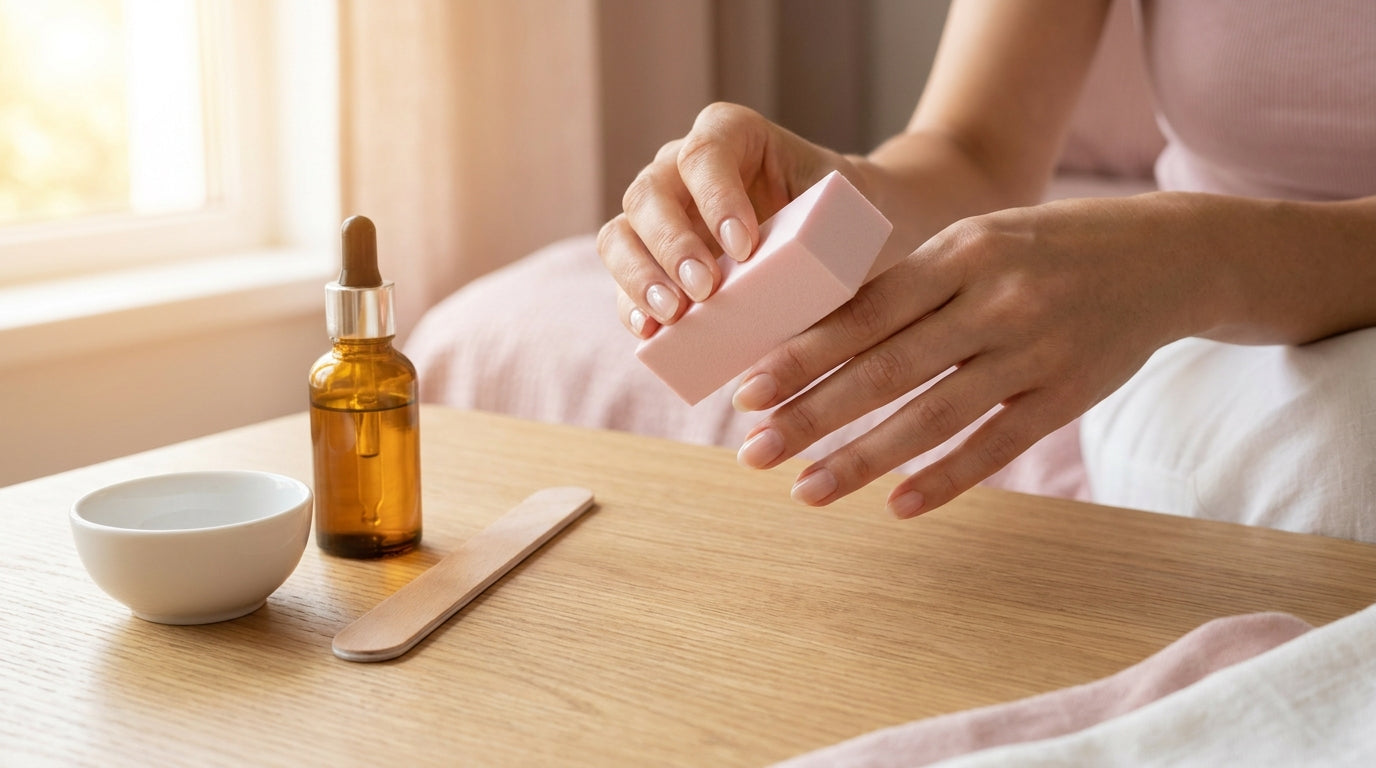
Proper nail prep is the difference between press-ons that last days and ones that fall off by morning. Here's exactly what to do.

Dreaming of perfect nails on your wedding day? Discover why press-on nails are the go-to choice for modern brides – from style tips to making them last all day.