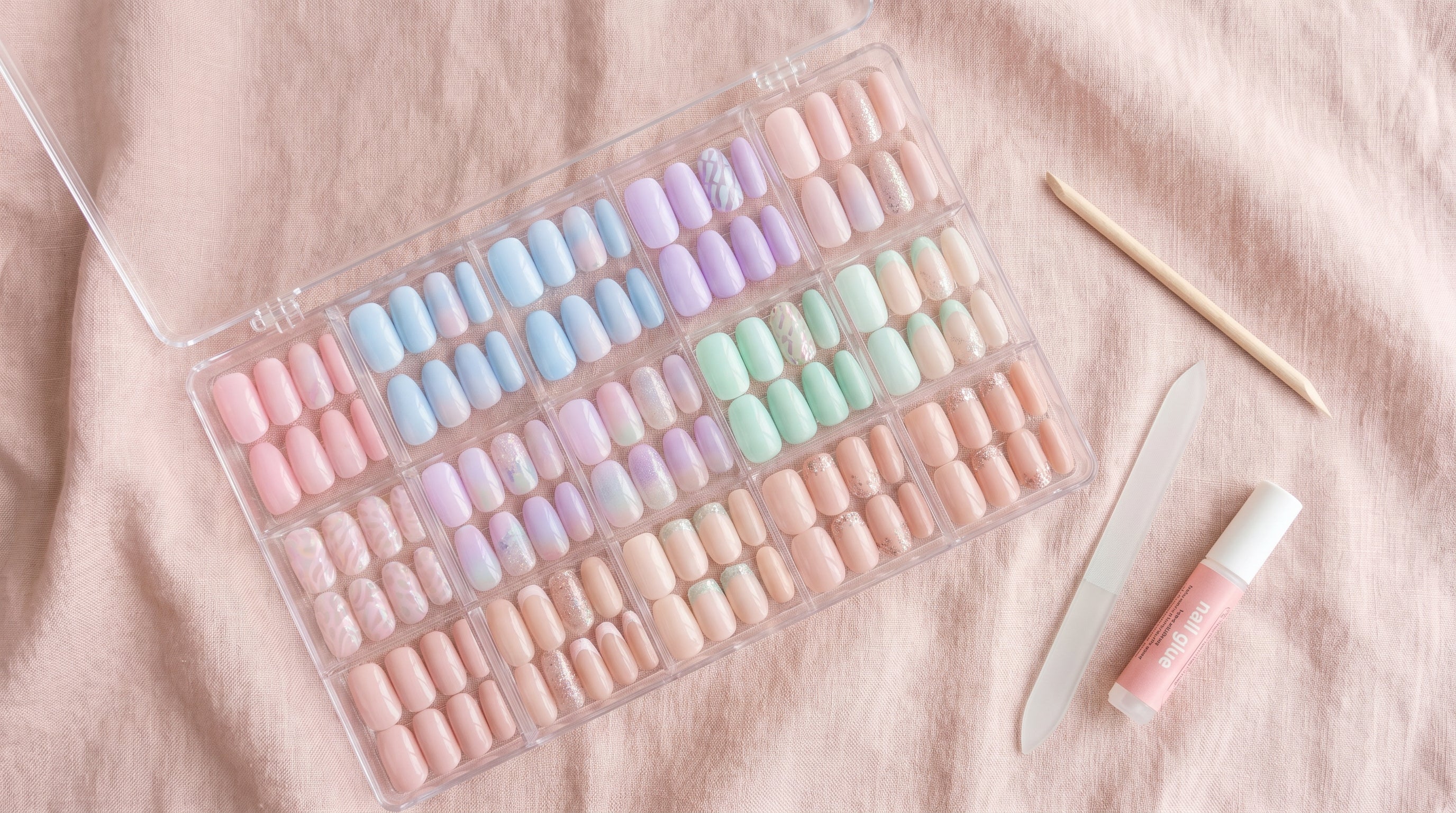
press-on nails
How to Store Press-On Nails: Keep Your Collection Organised and Ready to Use
The right storage keeps your press-on nails in perfect condition for multiple uses.
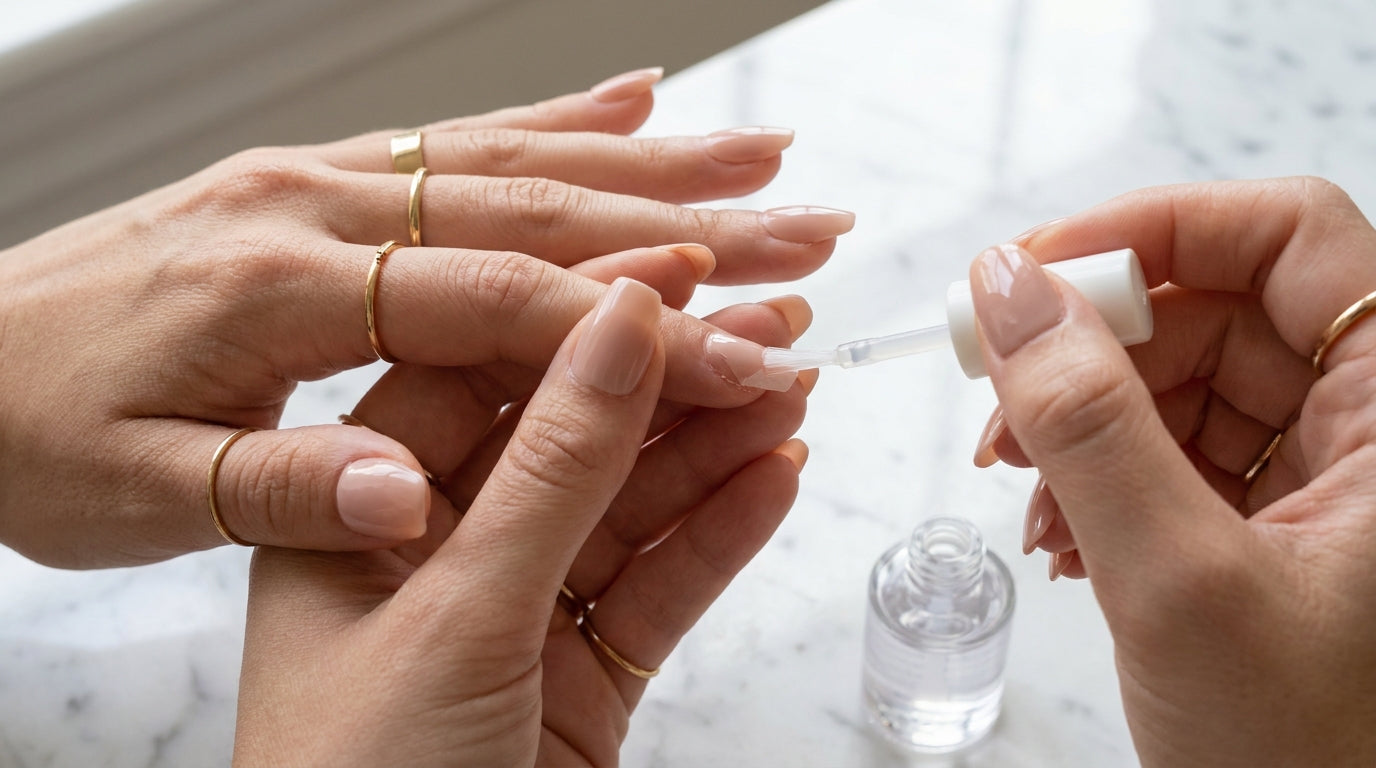
A broken press-on nail doesn't have to ruin your day. Whether it's cracked, chipped, or has completely popped off — most damage is fixable in under five minutes with the right tools.
Here's exactly what to do, what to grab, and when to reach for a replacement instead.
Depends on the damage. A simple rule:
Keep these on hand:
Is a fragment hanging off? Gently remove it. Don't yank — if glue is holding it stubbornly, dab a bit of acetone on a cotton swab to soften the adhesive first.
Never force a press-on off. That pulls layers off your natural nail and turns a small problem into a bigger one.
A rough edge catches on everything and will re-break faster. Lightly file the broken edge with a fine grit file or buffer. File in one direction — back-and-forth motion weakens the nail further.
For a crack or small chip:
A thin layer of gel top coat or clear nail polish over the repaired area makes a noticeable difference in durability. Let it dry and you're done.
If the nail had polish or gel on it, cover the repair with a small drop in the matching shade. No one will know it ever broke.
Some breaks are just too big. If the nail has snapped past the halfway point, or if it's broken in the same spot twice already, a fresh nail is the better move.
At Popink, nails can be ordered by size or as individual spares, so you don't have to buy a whole new set just to replace one.
Most breaks are avoidable. A few habits that make a real difference:
Yes, usually. If you've re-glued a nail or patched a small chip, you can still remove it carefully and use it again in a future set.
One thing to watch: each layer of glue adds a tiny bit of thickness, which can affect how well the nail fits over time. Always check the fit before reusing a previously repaired nail.
Want more on getting the most out of your sets? Read how to remove and reuse press-on nails.
In a pinch, yes — but it's not ideal. Super glue (cyanoacrylate) is chemically similar to nail glue but thicker and less flexible, which can cause the nail to feel stiff or pop off again. Use it as an emergency fix only. Proper nail glue is made for this, bonds better, and dissolves cleanly with acetone.
Re-glue the broken piece as a temporary fix to get through the day. If the break is too severe for that, you can lightly file the remaining nails to a shorter length so the length difference is less obvious. Not a perfect solution, but it works until you can sort a proper replacement.
A well-repaired nail can last several more days — sometimes through the rest of the intended wear period. Reinforcing the repair with a layer of top coat significantly improves the odds of it holding.
Absolutely. Once the glue is fully cured (give it at least 10 minutes), a drop of matching nail polish covers the repaired line completely. Just make sure you're not painting over wet glue, as that can prevent it from setting properly.
Yes, to a degree. If your natural nails are thin, brittle, or damaged, nail glue has less to grip and press-ons are more likely to lift and snap. Working on nail health between sets helps. Our guide on nail care between press-on sets covers exactly how to do that.
Tired of fragile nails that snap too easily? Explore our collection of reinforced press-on nails — made from durable acrylic that handles real life without breaking.
The right storage keeps your press-on nails in perfect condition for multiple uses.
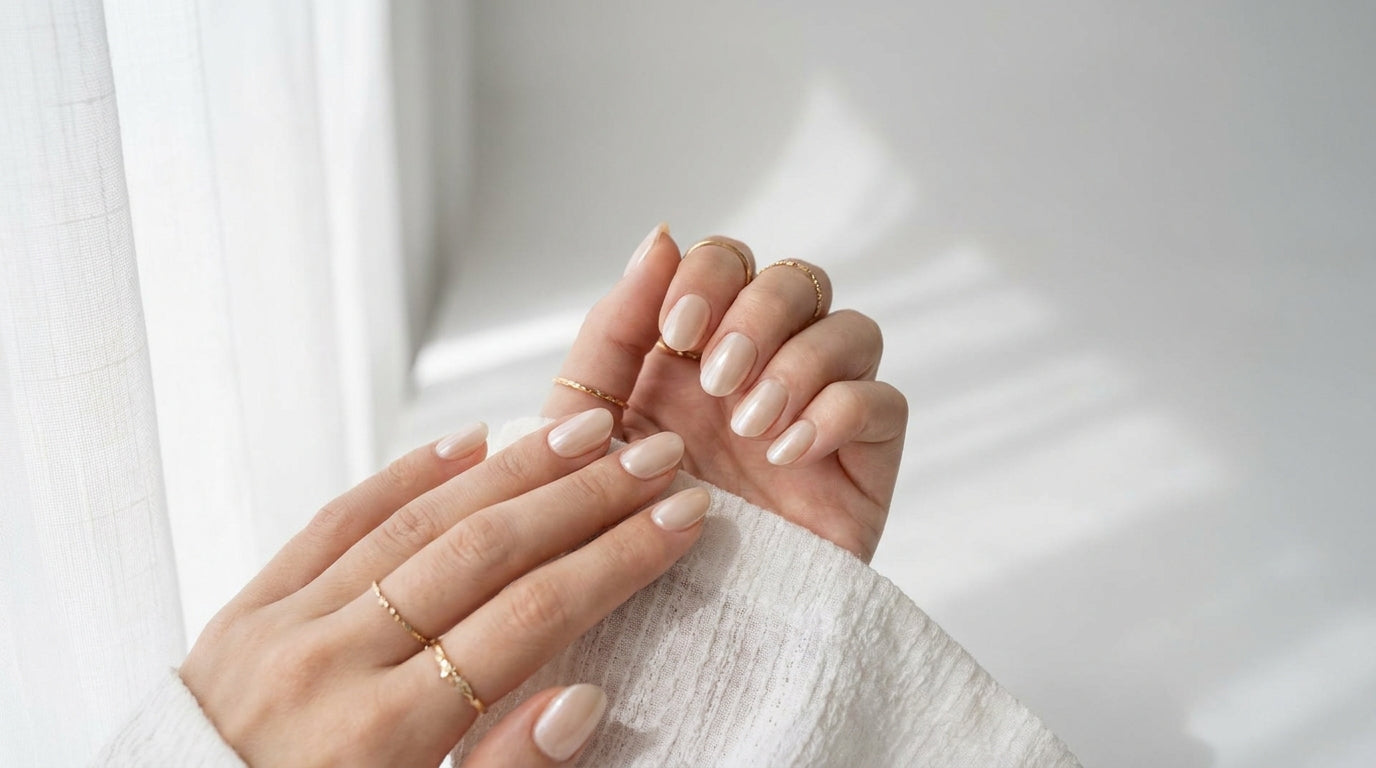
Clean girl nails are one of the biggest nail trends right now — and press-ons make them surprisingly easy to pull off.

You don't have to choose between beautiful nails and an active lifestyle. Here's how to wear press-ons through workouts, yoga sessions, and more.