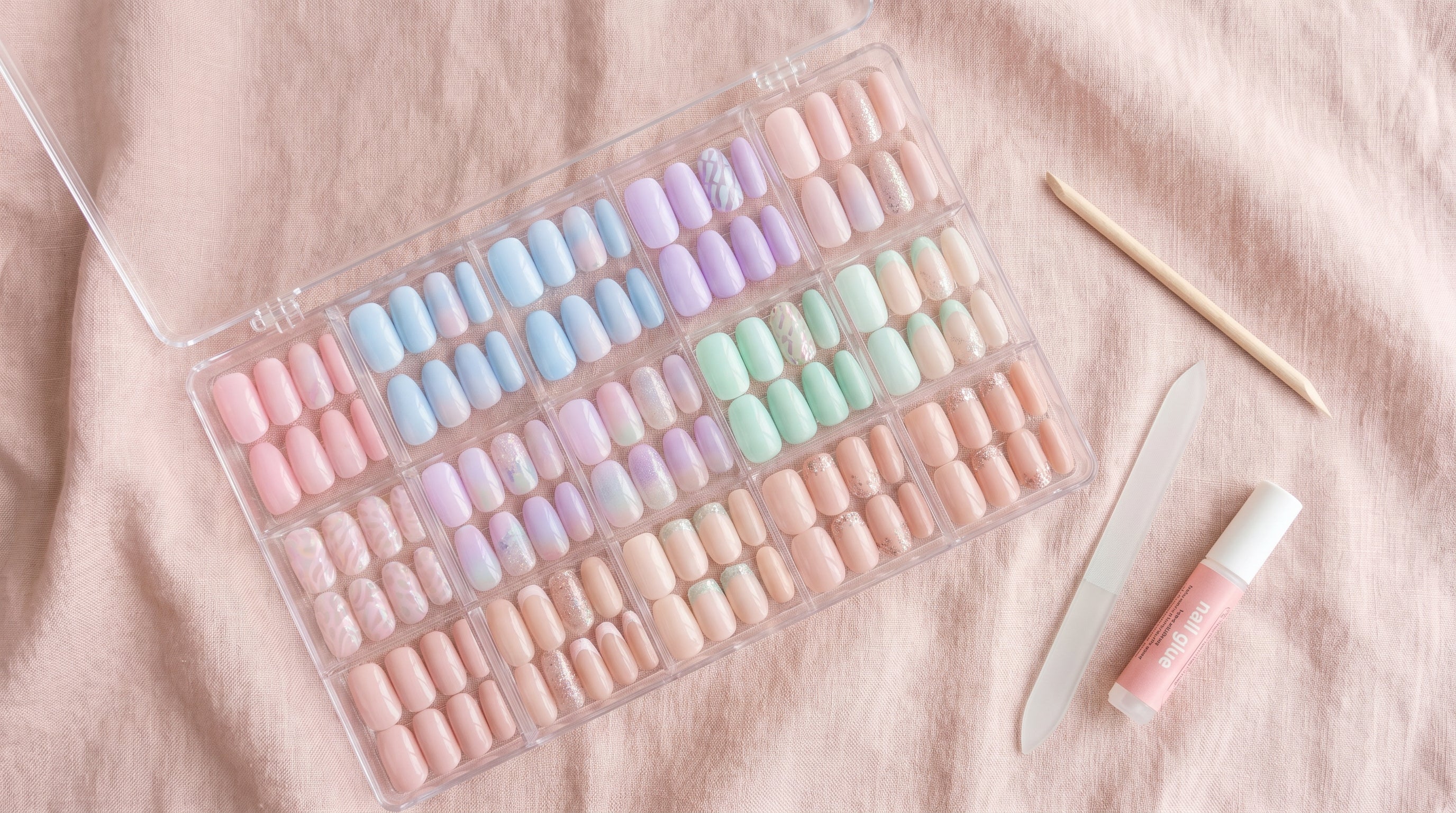
press-on nails
How to Store Press-On Nails: Keep Your Collection Organised and Ready to Use
The right storage keeps your press-on nails in perfect condition for multiple uses.

Press-on nails and water are compatible — as long as you know the difference between a quick handwash and an hour in the pool. The nails themselves are waterproof. The adhesive holding them on is a different story. Once you understand that, everything else makes sense.
Press-on nails are made from durable acrylic or ABS plastic — fully waterproof. But the glue or gel tabs that bond them to your nail bed are not designed for prolonged submersion. Extended contact with water, especially warm or chlorinated water, gradually breaks down the adhesive bond.
The weak point isn't the middle of the nail — it's the edges. Water finds its way under the rim, lifts the seal, and that's when nails start to pop off. Which is why perfect prep (clean, oil-free, completely dry nails) matters so much before you even open the glue. More on that in our guide on how to apply press-on nails.
A daily shower is no problem. 5-10 minutes of warm water won't budge well-applied press-ons. Wash your hair, use your body wash, go about your routine.
A couple of small habits help:
No hesitation needed here. Handwashing with soap and water is completely safe for press-on nails. Do it as often as you need to — hygiene always comes first.
One thing to watch: avoid applying thick, oily hand cream right at the nail edges. Oil is actually harder on adhesion than water.
This is where it gets trickier. Warm water combined with washing-up liquid is one of the fastest ways to weaken adhesive. Always wear rubber gloves when doing dishes. Same goes for wet cleaning tasks — wiping down surfaces, scrubbing the bathroom, that kind of thing.
With a decent pair of gloves, this is a complete non-issue. It takes two seconds to put them on.
You can swim with press-on nails. Short swims are generally fine; long daily sessions in the pool will shorten wear time significantly.
Chlorine is tough on adhesive. A 30-minute swim every now and then? Usually okay. Two-hour sessions every day for a week? Expect your nails to start lifting sooner. Dry your hands immediately after getting out of the water and press the edges down firmly.
Salt water is slightly gentler than chlorine, but the same principle applies — the longer you're in, the more the adhesive is exposed. A swim at the beach followed by drying off promptly is totally manageable.
This is the hardest test: hot water, long duration, jets pushing water under the edges. If you want to keep your nails on, skip the jacuzzi or keep it very brief. This combination is almost guaranteed to cause lifting.
These small habits make a real difference:
Don't panic. Press-on nails are reusable as long as they're not cracked or broken. Remove any old glue residue carefully, let your natural nail dry completely, and reapply with fresh glue. For the full process, see our post on how to reuse press-on nails.
If edges are consistently lifting near water, the issue is almost always in the prep — not the water itself. Check your application routine before blaming the product.
With normal daily routines (showering, handwashing): 1-2 weeks easily. If you swim daily or do dishes without gloves regularly, expect 5-7 days. Still impressive for something you can apply in under 15 minutes.
For the full breakdown, read our post on how long press-on nails last and how to make press-on nails last longer.
Heading into summer? Browse the Popink collection for sets that are built for real life — from subtle nudes that go with everything to bold designs made for beach days. Find your perfect match and wear them with confidence, water and all.
The right storage keeps your press-on nails in perfect condition for multiple uses.
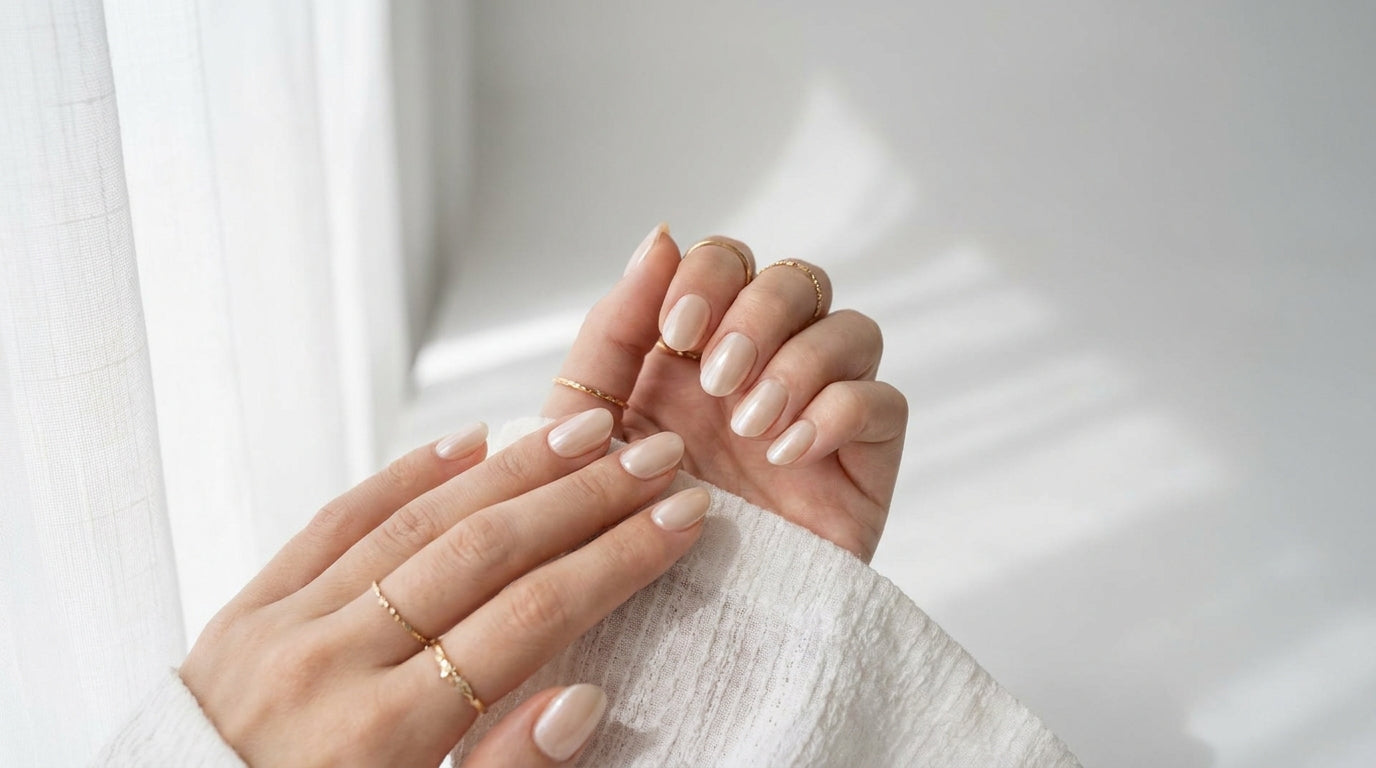
Clean girl nails are one of the biggest nail trends right now — and press-ons make them surprisingly easy to pull off.
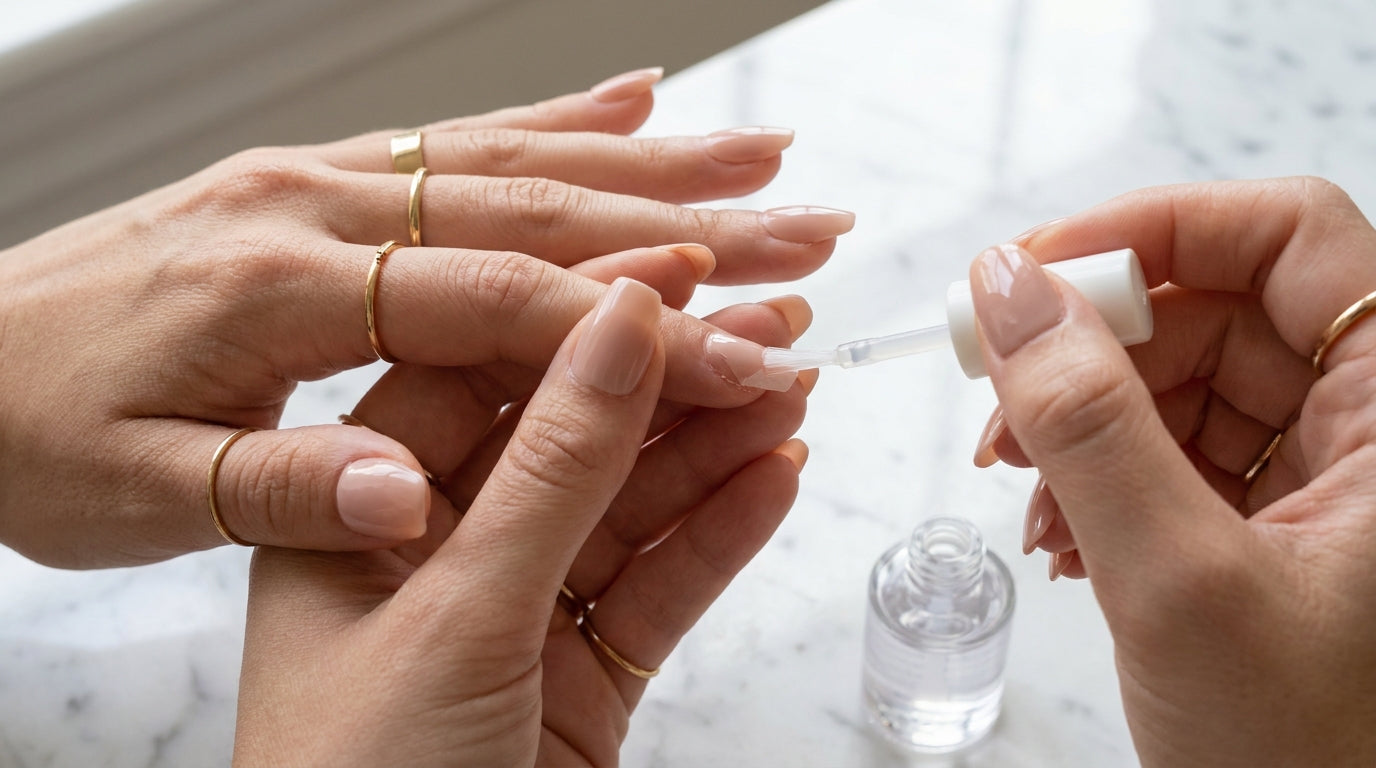
A broken press-on nail is easier to fix than you think — the right approach has you sorted in minutes.